Explore evidence-based insights on health, brain science, mental wellbeing, sleep, nutrition, mindfulness, healthy living, longevity, and medical research. Discover clear, practical, science-informed knowledge to support better health, mental clarity, wellbeing, and a longer, healthier life.
Mindful Pulse Spotlight: Science, Health & Longevity
Medical & Safety Disclaimer: The neurological and physiological information discussed in this article is for educational and self-improvement purposes only. It is not intended to diagnose, treat, or cure any sleep disorders. If you experience severe nightmares, chronic insomnia, sleep apnea, or overwhelming daytime fatigue, please consult a licensed healthcare professional or a certified sleep specialist. Why Do Some People Remember Vivid Dreams While Others Don’t? (REM Sleep Density Explained) 🌌🧠 Your ability to remember vivid dreams is deeply connected to your brain's unique neurochemistry and how often you briefly wake up during the night. Key Points & Quick Takeaways 📌 Everybody dreams every single night, but brain wiring determines who retains those memories upon waking. REM sleep density refers to the intensity and frequency of rapid eye movements, which correlates directly with highl...
Get link
Facebook
X
Pinterest
Email
Other Apps
How to Improve Focus: The Neuroscience of Attention
Get link
Facebook
X
Pinterest
Email
Other Apps
Medical & General Disclaimer
This article is for general informational and educational purposes only.
It is not a substitute for individualized professional medical advice, diagnosis, or treatment.
Always consult a qualified healthcare provider regarding neurological conditions, ADHD, or cognitive health concerns.
How to Improve Focus: The Neuroscience of Attention
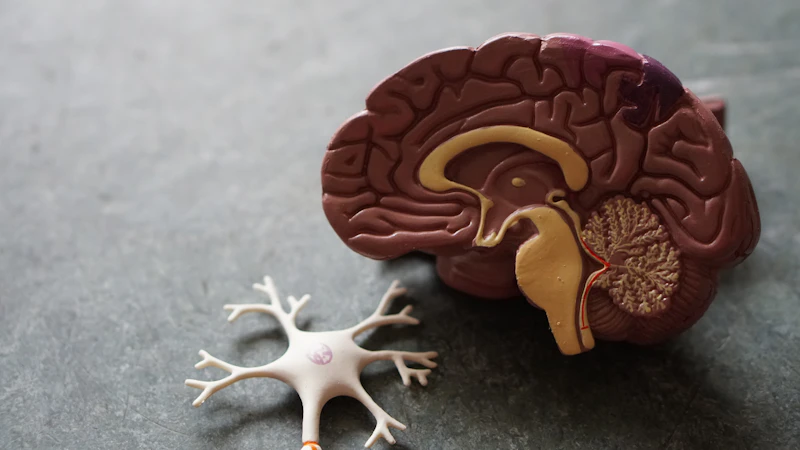
Designing a distraction-free environment is the first step toward optimizing your brain's attentional capacity.
We’ve all been there: staring at a screen, reading the same sentence three times, while our mind wanders to a dozen unrelated tasks. In a world practically engineered to hijack our attention, maintaining deep concentration feels harder than ever. If you find yourself constantly asking how to improve focus, the answer doesn't lie in simply "trying harder." It requires understanding your biology.
Focus isn't just a matter of willpower; it is a measurable, physiological state managed by specific networks and chemicals in your brain. By learning how these neural mechanisms work, you can stop fighting your biology and start working with it to sustain your mental performance.
Key Takeaways
Focus is governed by a balance between the Central Executive Network (task-focus) and the Default Mode Network (mind-wandering).
Neurotransmitters like dopamine and acetylcholine are the primary chemical drivers of sustained attention.
Working in 90-minute ultradian rhythms maximizes natural brain energy peaks.
Taking scheduled mental breaks allows the brain to consolidate information and replenish focus-related neurochemicals.
The Neuroscience of Attention (How Your Brain Focuses)
To understand how to sharpen your concentration, we first need to look at what happens inside your head when you sit down to work. Human attention is largely controlled by the prefrontal cortex, the area of the brain located just behind your forehead. This region acts like an orchestra conductor, deciding which stimuli to ignore and which to prioritize.
When you attempt to focus, your brain toggles between two primary networks:
The Central Executive Network (CEN): This is your "doing" network. It activates when you are actively engaged in a demanding cognitive task, solving a problem, or focusing deeply on a singular goal.
The Default Mode Network (DMN): This is your "mind-wandering" network. It activates when you are daydreaming, thinking about the past, or planning for the future.
Strong focus requires activating the CEN while quietly suppressing the DMN. When you feel easily distracted, it is often because your Default Mode Network is overpowering your executive control.
The Biology of Distraction: Why Do We Lose Focus?
Our brains evolved to notice sudden changes in our environment—a survival mechanism that kept our ancestors safe from predators. Today, that same survival mechanism forces us to look at every smartphone notification. Several biological factors contribute to scattered attention:
Distraction Factor
How It Affects the Brain
Dopamine Depletion
Endless scrolling provides cheap dopamine hits. When you try to do "boring" work, your brain lacks the dopamine required to stay engaged.
Sleep Deprivation
Lack of sleep impairs the prefrontal cortex, severely reducing your ability to filter out background noise and distractions.
Chronic Stress
High cortisol levels shift the brain into "survival mode," making you hyper-vigilant to your environment rather than focused on a single task.
Focus relies heavily on neurotransmitters like dopamine and acetylcholine to lock onto tasks and filter out noise.
How to Improve Focus: Science-Backed Strategies
Improving concentration isn't a magical gift; it is a skill that can be trained by optimizing your biological environment. Here are practical, science-backed ways to enhance your focus.
1. Optimize Your Neurochemistry (Dopamine & Acetylcholine)
To lock your attention onto a task, your brain needs acetylcholine (which highlights what to focus on) and dopamine (which provides the motivation to keep looking at it). You can naturally support these neurotransmitters by:
Viewing morning sunlight: Getting 10-15 minutes of sunlight in your eyes shortly after waking helps regulate circadian rhythms and primes healthy dopamine release for the day.
Embracing visual focus: Staring intently at a single point (like a dot on the wall) for 60 seconds before starting work can naturally trigger acetylcholine release, preparing the brain for deep work.
2. Leverage Ultradian Rhythms
The human brain is not designed to focus continuously for 8 hours. Just as we have 90-minute sleep cycles, we also operate on 90-minute cycles of waking alertness, known as ultradian rhythms. To maximize your output, structure your deep work into 90-minute blocks, followed by 10 to 20 minutes of complete cognitive rest.
3. Practice Non-Sleep Deep Rest (NSDR)
When you take a break, scrolling through social media doesn't rest your brain—it taxes it further. To truly replenish your cognitive reserves, try Non-Sleep Deep Rest (NSDR) or Yoga Nidra. These guided relaxation protocols slow down brain wave activity, accelerating neuroplasticity and quickly restoring the neurochemicals required for your next focus block.
4. Strategic Caffeine and Nutrition
While caffeine is a well-known focus enhancer, timing matters. Delaying your first cup of coffee until 90 to 120 minutes after waking can help prevent the afternoon energy crash by allowing natural adenosine (the sleepiness chemical) to clear out of your system first. Additionally, staying hydrated and consuming foods rich in Omega-3 fatty acids directly supports neuronal health.
Daily Habits for Sustained Concentration
Beyond neuroscience hacks, building a distraction-free environment is essential for long-term success. Implement these environmental adjustments:
Keep your phone in another room: Studies show that just having your smartphone visible on your desk drains cognitive capacity, even if it is turned off.
Use background noise strategically: Low-level white noise or binaural beats (particularly at 40Hz) have been shown in some studies to support focused states.
Single-tasking only: Multitasking is a myth. The brain actually rapidly switches between tasks, burning through energy and reducing overall accuracy. Commit to one tab and one task at a time.
Conclusion
Learning how to improve focus is a journey of understanding and respecting your biology. By structuring your day around natural brain rhythms, managing your neurochemistry through healthy habits, and relentlessly protecting your environment from distractions, you can train your mind to achieve deeper, more sustainable concentration.
Article Summary
True focus requires activating the brain's executive network while minimizing the mind-wandering default mode network.
To improve mental performance, align your deep work sessions with natural 90-minute ultradian rhythms.
Support your focus-driving neurochemicals (dopamine and acetylcholine) through morning sunlight, visual focus exercises, and proper sleep.
Eliminate environmental distractions—especially smartphones—to prevent cognitive drain and avoid multitasking.
Editorial Integrity & Author Information
✔ Content standard: Evidence-based, human-written, and scientifically reviewed.
✔ Mission: To translate complex neuroscience and biology into accessible, practical tools for everyday mental performance and longevity.
✔ Trust: Mindful Pulse guarantees that no fake medical claims, exaggerated statistics, or invented credentials are used in our publications.
Mindful Pulse USA Editorial Disclaimer: The information provided in this article is for educational and informational purposes only. While talking to oneself is a healthy and normal cognitive function, hearing external voices that are not your own or experiencing distressing auditory hallucinations can be a sign of a neurological or mental health condition. Always consult a qualified healthcare professional with specific mental health questions. Why do we naturally talk to ourselves when we are stressed or trying to focus? (External self-talk and emotional regulation). Self-talk linked with brain focus and emotional regulation Quick Takeaways Muttering to yourself when stressed or searching for something is not a sign of cognitive decline; it is a sign of high executive functioning. Vocalizing your thoughts forces the brain to slow down and process information sequentially, preven...
How to Improve Memory and Cognitive Function Medical & Safety Disclaimer: The information provided in this article is for educational purposes only and is not a substitute for professional medical advice, diagnosis, or treatment. Always consult with a qualified healthcare provider regarding any sudden memory loss, cognitive changes, or before starting new dietary and exercise programs. How to Improve Memory and Cognitive Function Building mental agility is an active, lifelong practice that strengthens neural pathways. Few things are as deeply frustrating as a failing memory. Whether it is forgetting the name of a familiar colleague, losing your keys for the third time in a week, or struggling to absorb new information, these moments can trigger a quiet anxiety. We rely on our memories to construct our identities and navigate our daily lives. When that starts to feel fuzzy, it is entirely normal to worry. How...
Mindful Pulse USA Editorial Disclaimer: The information provided in this article is for educational and informational purposes only. It is not intended as a substitute for professional medical advice, cognitive evaluation, diagnosis, or treatment. Always seek the advice of a qualified healthcare professional with any questions regarding memory, cognitive health, or a medical condition. Why do we forget what we were about to do the moment we enter a new room? (The 'Doorway Effect' in psychology). Crossing a physical threshold acts as an "event boundary" for our working memory. Quick Takeaways The "Doorway Effect" is a well-documented psychological phenomenon where changing physical locations causes temporary memory loss. It happens because the brain treats physical doorways as "event boundaries," essentially clearing out short...




Comments
Post a Comment